Dark rye, and the one bake I cannot rush
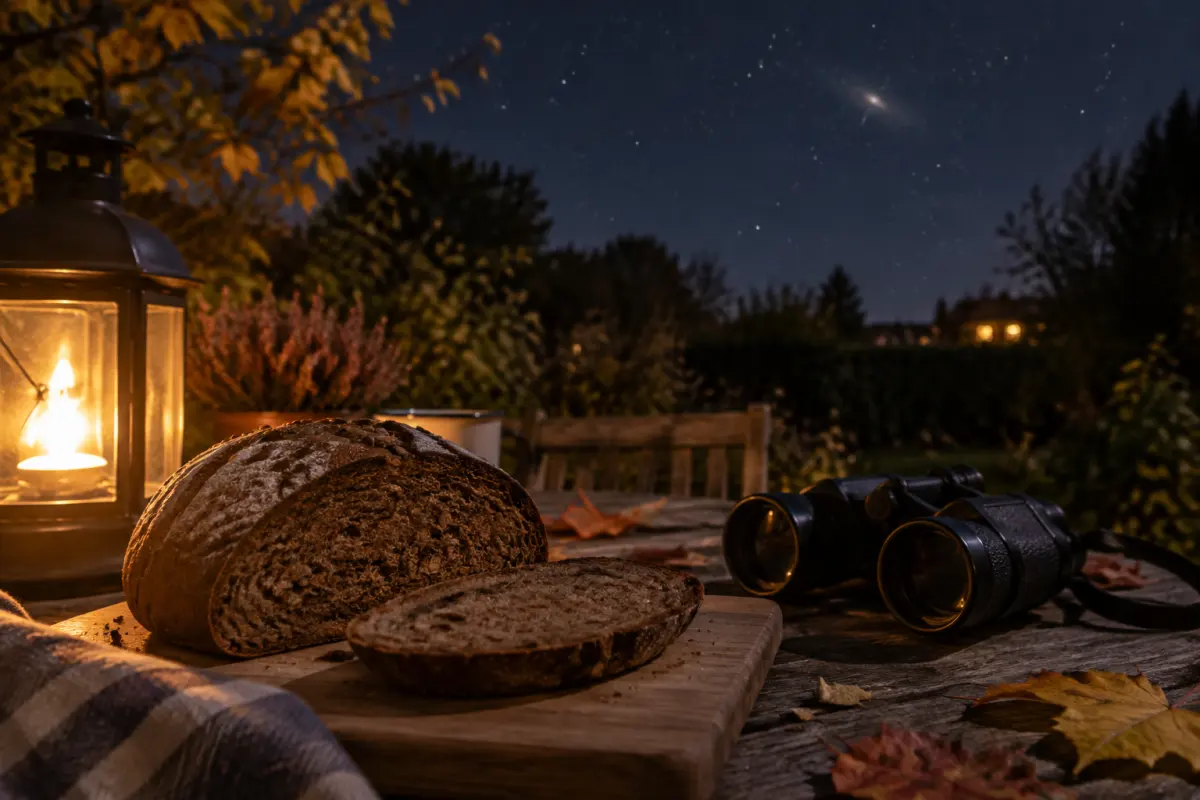
White bread forgives you. Rye does not. There is no gluten network to speak of, the dough behaves like wet clay, and the thing that holds the loaf together is a gel of pentosans that only sets properly once the bread has cooled all the way through. Cut it warm and you get a damp, sticky slab and the suspicion that you have done something wrong. You have, but it was the cutting.
70% dark rye, one tin
- 350 g wholegrain rye flour
- 150 g strong white flour
- 150 g rye starter, active
- 330 g strong black coffee, cooled
- 30 g black treacle
- 11 g salt
- 1 tbsp caraway seeds, lightly crushed
Mix with a spoon until uniform. It will look like something you should not bake. Scrape it into an oiled tin, smooth the top with a wet spoon, cover, and leave it for four to five hours until the surface is domed and shows small cracks. Not doubled: rye never doubles.
Bake at 220 °C for fifteen minutes, then 180 °C for a further fifty. The internal temperature should be 96 °C or so. Then the hard part: out of the tin, onto a rack, wrapped in a tea towel, and left alone for twenty-four hours.
I baked this one on a Friday evening and took it outside on Saturday night with a flask and binoculars. Andromeda was up and the sky was better than it has any right to be in October. The loaf had set properly: dense, sliceable thin, tasting of coffee and treacle and something faintly sour underneath. It keeps for a week and gets better for the first three days.
Twenty-four hours is a long time to look at a loaf you want to eat. It is, roughly, the same discipline as not touching the focuser.