A small refractor and no patience at all
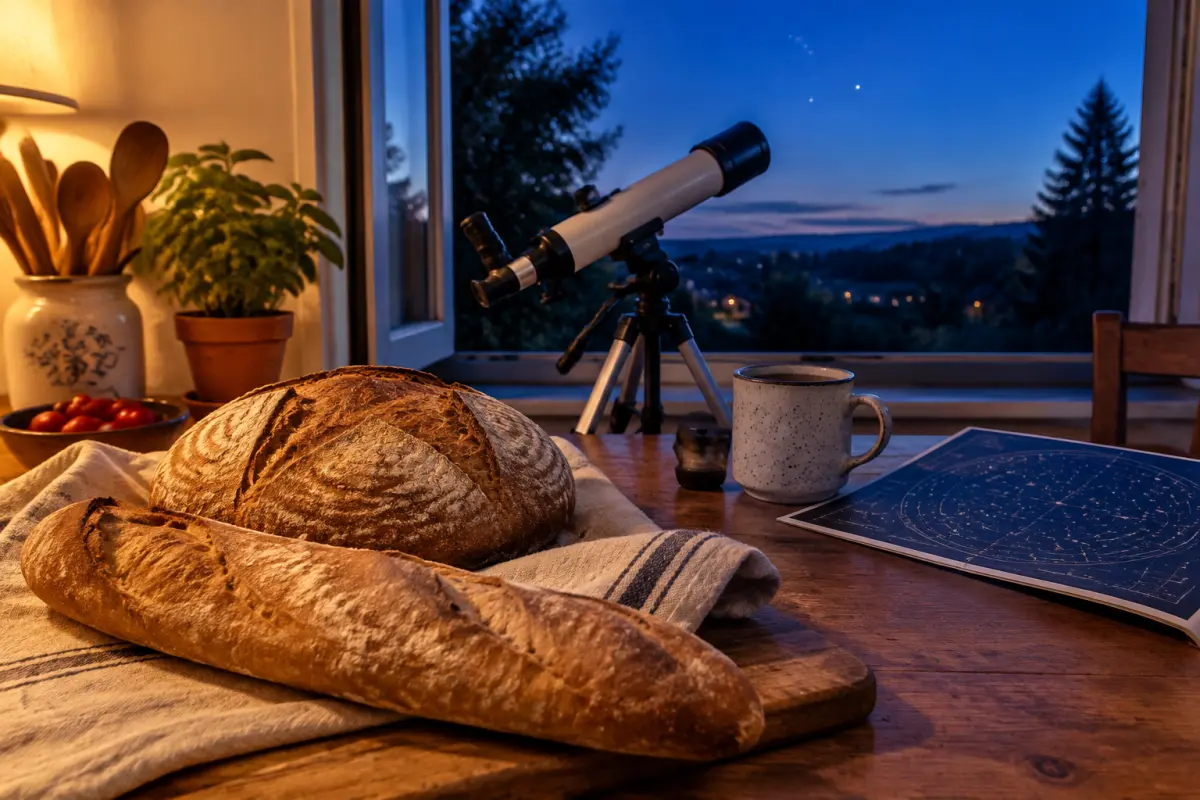
I bought a 70 mm refractor in the spring, mostly because the box said it magnified 525 times, which should have been a warning rather than a selling point. The eyepiece that gets you to 525 times is a plastic thing that turns Jupiter into a bright smear. The two usable eyepieces give about 28 and 70 times, and those are the ones I have used every night since.
First three nights: nothing. Or rather, everything was there and I could not hold it still long enough to look at it. The tripod that comes with a cheap telescope is the real limit, not the glass. Every nudge of the focuser sends the view wandering for four seconds. I spent more time waiting for the shake to stop than observing.
The fix cost nothing: I put the tripod on the garden table instead of the lawn, hung a bag of flour from the centre column, and stopped touching the tube with my hand while looking. The shake settles in under a second now.
What it actually shows
| Target | At 70× |
|---|---|
| Moon | Absurdly good. Craters along the terminator look three-dimensional. |
| Jupiter | A small disc, two dark bands, four moons in a line. |
| Saturn | Clearly not round. Rings separate from the disc on a steady night. |
| Orion Nebula | A grey fan around four stars. No colour. Still the best thing in the sky. |
| Andromeda | A faint oval smudge, and only when I look slightly away from it. |
| Albireo | Two stars, one gold, one blue. The one target that looks like a photograph. |
Everything I expected to be impressive was not, and everything I had ignored turned out to be the good part. Nobody puts double stars on the box, and they are the thing a small telescope does best.